

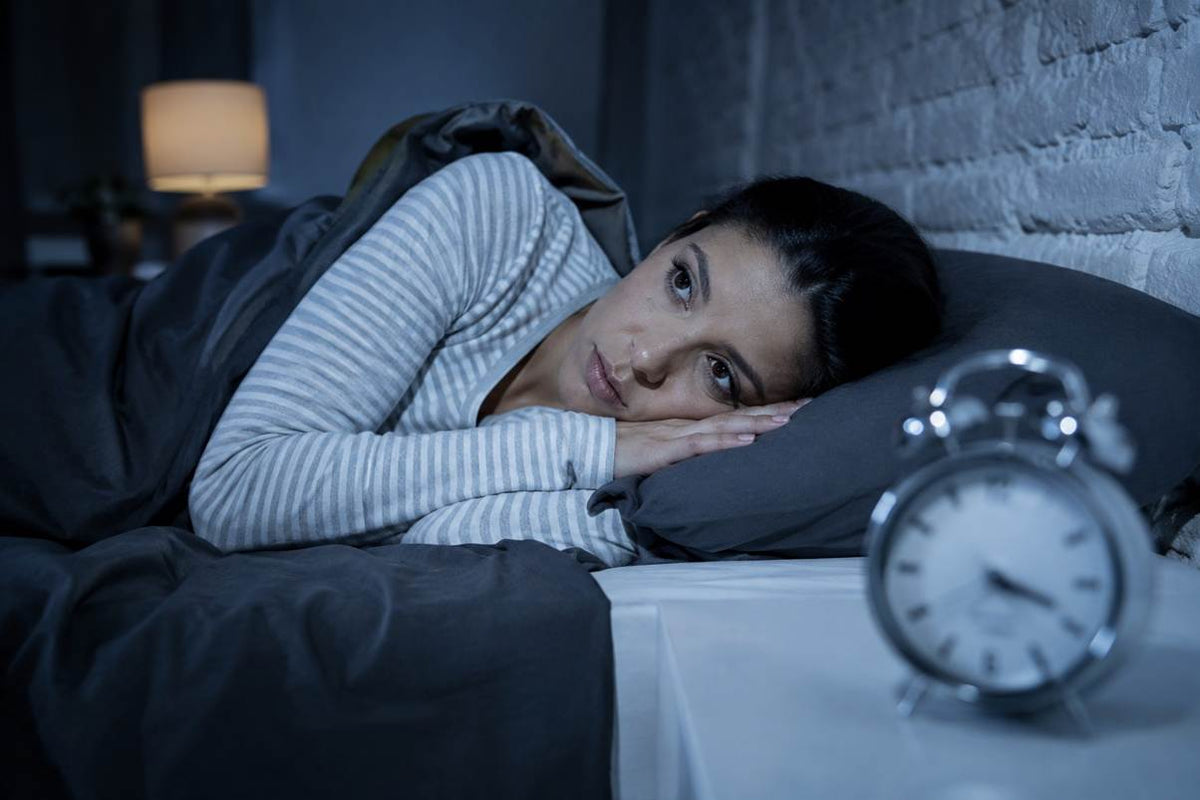
Few things are more frustrating than being exhausted, going to bed hoping for a good night’s sleep—and then lying awake while the mind refuses to switch off. For others, falling asleep is easy, but they wake at 2 or 3 a.m. and cannot get back to sleep.
Sleep problems have become remarkably common. A major global analysis published in 2025 estimated that about 16% of adults worldwide—more than 850 million people—suffer from clinically significant insomnia, with almost 8% experiencing severe insomnia. In the UK, a large UK Biobank study found chronic insomnia in 14.4% of respondents. In the United States, 14.5% of adults reported regularly having difficulty falling asleep and 17.8% difficulty staying asleep.
The good news is that poor sleep often has identifiable causes—and many of them can be addressed naturally.
Why Can’t I Sleep?
Insomnia is not always simply a lack of tiredness. Often the brain and body are receiving the wrong signals at the wrong time.
Common causes include:
- Stress, anxiety, depression and an overactive mind
- Too little daylight, especially during the morning and daytime
- Too little physical activity
- Irregular sleeping and waking times
- Caffeine, particularly later in the day
- Alcohol and nicotine
- Bright lights, phones, tablets and computers late at night
- Inadequate intake or deficiency of nutrients such as magnesium, vitamin D and certain B vitamins
- Hormonal changes, particularly during perimenopause and menopause
- Chronic pain
- Restless legs syndrome
- Certain medications
- Obstructive sleep apnoea

Before reaching for sleeping tablets or supplements, it therefore makes sense to ask: What is preventing the body from sleeping normally?
Reset the Body Clock With Morning Light
During the rest of the day, remain physically active and try to obtain as much natural daylight as possible. The more light you see during the day, the more serotonin and melatonin your body will make.
Reverse the process in the evening. Dim the lights and reduce exposure to bright screens during the final hour or two before bed.
Exercise During the Day—Sleep Better at Night
Regular walking and other forms of physical activity can improve sleep, reduce stress and help the body feel naturally tired by evening. Exercising outdoors has an additional advantage because physical activity and natural daylight occur together.
Very strenuous exercise immediately before bedtime, however, can be too stimulating for some people.

Magnesium: One of the Most Useful Sleep Minerals
Magnesium is involved in hundreds of processes in the body and is particularly important for normal nerve and muscle function. It also participates in biological processes involved in relaxation, circadian rhythms and sleep.
In a 2025 randomised, double-blind, placebo-controlled study involving 155 adults with poor sleep, 250 mg of elemental magnesium from magnesium bisglycinate daily produced a significant improvement in insomnia severity after four weeks.
Two forms are particularly worth considering:
Magnesium bisglycinate (glycinate) – an excellent choice when relaxation and sleep are the main goals. Magnesium Bisglycinate is Magnesium bound to an amino acid called Glycin, which facilitates the absorption of Magnesium. The body can absorb and utilise Magnesium more easily in this form. HealthAid Magnesium Bisglycinate is paired with Vitamin B6, which also assists in the absorption of Magnesium.


5-HTP: Helping the Body Produce Serotonin and Melatonin
Another interesting option is 5-HTP (5-hydroxytryptophan). The body naturally converts the amino acid tryptophan into 5-HTP, which is then converted into serotonin. Serotonin, in turn, is involved in the pathway through which the body produces melatonin, an important regulator of the sleep-wake cycle.
The pathway can be simplified as: Tryptophan → 5-HTP → Serotonin → Melatonin
Importantly, 5-HTP should not normally be combined with antidepressants or other medicines that increase serotonin without medical advice.

Ashwagandha: When Stress Is Keeping You Awake
Sometimes the problem is not insufficient tiredness—it is too much stress.
Ashwagandha (Withania somnifera) is an adaptogenic herb traditionally used to help the body cope with stress. It may therefore be particularly interesting when a person feels physically exhausted but mentally “wired”.
A systematic review and meta-analysis of five randomised controlled trials involving 400 participants found that ashwagandha produced a significant improvement in sleep, with greater effects among people who already had insomnia.
Ashwagandha may therefore be particularly worth considering when stress, anxiety and difficulty switching off at night appear to be major contributors to poor sleep.

Other Natural Sleep Helpers
Several other natural remedies may be useful, depending on the cause of the problem.
L-theanine may promote relaxation without strong sedation. Valerian, passionflower, lemon balm and chamomile have traditionally been used to calm the nervous system.
Adequate levels of vitamin B12, other B vitamins, vitamin D, zinc and omega-3 fatty acids are also important for general nervous-system and brain health. Deficiencies should be corrected rather than assuming that every case of insomnia requires a sleeping tablet.

Create a Powerful Evening Routine
- Wake at approximately the same time every morning, even after a poor night.
- Get outdoor light soon after waking.
- Exercise and remain physically active during the day.
- Avoid caffeine during the afternoon and evening.
- Avoid alcohol as a sleep remedy—it may make falling asleep easier but can disturb sleep later in the night.
- Avoid heavy meals shortly before bed.
- Reduce bright lights, television, phones and computer screens during the evening.
- Keep the bedroom dark, quiet and comfortably cool.
- Go to bed when genuinely sleepy rather than simply because the clock says it is bedtime.
- If the mind is racing, read something peaceful, pray, practise slow breathing or write down tomorrow’s tasks rather than continuing to think about them in bed.
- If sleep does not come, avoid repeatedly checking the clock.
Most importantly, do not turn sleep into a nightly examination that must be passed. Worrying about not sleeping can itself become one of the factors that perpetuate insomnia.

RELATED ARTICLES
SOURCES
- FullHealthSecrets.com – Insomnia
- GreenMedInfo – research and articles concerning magnesium, ashwagandha, 5-HTP and natural approaches to sleep
- Dr Axe – articles on insomnia, sleep, magnesium and natural sleep remedies
- Dr Jockers – articles on improving sleep, circadian rhythm, magnesium, stress and adaptogenic herbs
- Barbara O’Neill – educational material and presentations on natural approaches to sleep and lifestyle
- National Health Service (NHS) – insomnia and cognitive behavioural therapy information
- National Institute for Health and Care Excellence (NICE) – guidance concerning chronic insomnia and CBT-I
- UK Biobank – Sleep and Circadian Health in the UK Biobank: Report on the 2023 Sleep Questionnaire Enhancement
- Schuster J, Cycelskij I, Lopresti A, Hahn A. Magnesium Bisglycinate Supplementation in Healthy Adults Reporting Poor Sleep: A Randomized, Placebo-Controlled Trial. Natural Science of Sleep. 2025;17:2027–2040.
- Cheah KL, Norhayati MN, Yaacob LH, Abdul Rahman R. Effect of Ashwagandha (Withania somnifera) Extract on Sleep: A Systematic Review and Meta-analysis. PLoS One. 2021;16(9):e0257843.
- Sleep Medicine Reviews – Estimation of the Global Prevalence and Burden of Insomnia: A Systematic Literature Review-Based Analysis. 2025.
- US National Center for Health Statistics – Sleep Difficulties in Adults: United States, 2020.
This article is provided for educational and informational purposes only and is not intended to diagnose, treat, cure or prevent any disease or to replace advice from a doctor or other qualified healthcare professional. Persistent or severe insomnia may be caused by an underlying medical or psychological condition and should be properly investigated. Supplements and herbs can interact with medicines and may not be suitable during pregnancy, breastfeeding or for people with certain medical conditions. Anyone taking medication or receiving medical treatment should consult an appropriately qualified healthcare professional before using supplements or herbal remedies.


