

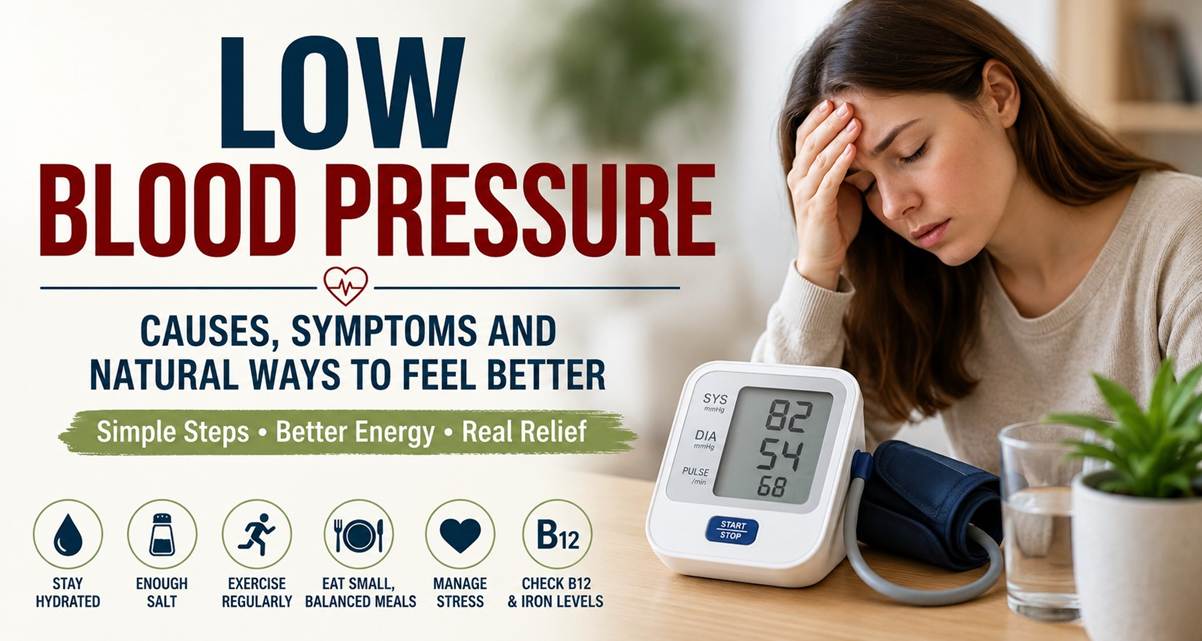
Most people worry about blood pressure being too high. But what happens when it is too low? For some people, nothing at all. They naturally have low blood pressure and feel perfectly healthy. For others, it can cause tiredness, weakness, dizziness, blurred vision and even fainting.
According to the NHS, blood pressure below 90/60 mmHg is generally considered low. However, the number itself is not everything. A healthy person may have a reading of 90/60 and feel completely normal, while someone else with the same reading may struggle to stand without becoming dizzy.
What Are the Symptoms?
Low blood pressure may cause:
- dizziness or light-headedness
- weakness and tiredness
- blurred or fading vision
- nausea
- difficulty concentrating
- fainting
It often becomes particularly noticeable when standing up quickly.
Repeated postural hypotension can also increase the risk of falls and injuries, especially in older people.
Why Does Blood Pressure Become Too Low?
Rather than simply asking “How can I raise my blood pressure?”, the more useful question is: “Why is my blood pressure low?”
Common causes include:
Dehydration
Not drinking enough, heavy sweating, diarrhoea, vomiting or hot weather can reduce blood volume and lower blood pressure.
Medicines
Blood-pressure medicines, diuretics and some medicines used for heart and other conditions can sometimes lower blood pressure too much.
Vitamin B12, Iron or Folate Deficiency
Deficiencies that cause anaemia can contribute to weakness, dizziness and poor exercise tolerance.
Vitamin B12 deficiency is particularly interesting because it can also interfere with the nervous system's control of blood pressure and has been reported as a reversible cause of postural hypotension.
Heart Problems
An unusually slow heartbeat, some arrhythmias, heart-valve problems and reduced pumping ability can cause low blood pressure.
Hormonal Problems
Problems involving the thyroid or adrenal glands can sometimes lower blood pressure.
Autonomic Nervous-System Problems
When a healthy person stands, blood vessels automatically tighten to maintain blood flow to the brain. If this response does not work properly, blood pressure can suddenly fall.
Blood Loss
Significant bleeding reduces circulating blood volume and can cause severe hypotension.
Physical Deconditioning
Long periods of inactivity can make the cardiovascular system less efficient at adapting to standing and exercise.

Most Useful Natural Ways to Improve Low Blood Pressure
1. Drink More Water
This is one of the simplest and most useful measures.
Adequate fluid helps maintain blood volume. NHS guidance therefore recommends increasing water intake for people experiencing symptoms of low blood pressure.
For people with postural hypotension, drinking a large glass of water before getting out of bed may also help.
2. Make Sure There Is Enough Salt
Sodium helps the body retain water and maintain blood volume. Increasing salt intake can therefore help some people with symptomatic postural hypotension.
This does not mean that everyone with low blood pressure should eat large quantities of salt. Extra sodium may be inappropriate for people with kidney disease, heart failure or certain other conditions.
Sea salt can be used if preferred, but it is important to understand that its main benefit here comes from sodium, not its trace minerals.

3. Exercise Regularly
Exercise is one of the most useful long-term approaches.
Walking, cycling, swimming and resistance exercise improve cardiovascular fitness, while stronger leg muscles help pump blood back towards the heart.
Even very simple movements can help when dizziness starts: Tighten the leg muscles, perform several calf raises, cross and squeeze the legs, or march gently on the spot.
These manoeuvres can temporarily increase blood return towards the heart and brain. NHS specialist guidance recommends similar physical counter-pressure techniques for postural hypotension.
The key is regular movement, not exhausting exercise.
4. Eat Smaller Meals
Some people become tired, weak or dizzy after eating a large meal. This is called postprandial hypotension.
Smaller, more frequent meals can help. Very large meals, particularly those containing a large amount of rapidly digested carbohydrate, may make the fall in blood pressure worse in susceptible people.
5. Get Up Slowly
Instead of jumping straight out of bed: Lie down → sit up → wait briefly → stand slowly.
Moving the feet and contracting the calf muscles before standing can help even more. It is simple, but often surprisingly effective.
6. Check Vitamin B12 and Iron
This can be particularly important when low blood pressure occurs together with fatigue, weakness, anaemia, numbness, tingling or neurological symptoms.
There are documented medical cases in which treating vitamin B12 deficiency dramatically improved postural hypotension. They have reported complete recovery of hypotension following B12 replacement when deficiency was the underlying cause.
This demonstrates an important principle: Sometimes the best way to raise blood pressure is not to stimulate the cardiovascular system at all—it is to correct the problem causing the blood pressure to fall.

What About Coffee?
Coffee can raise blood pressure temporarily because of its caffeine content. But this does not make caffeine a good long-term treatment for hypotension. Regular use leads to tolerance, while excessive caffeine can cause:
- palpitations
- nervousness and anxiety
- disturbed sleep
- headaches
- digestive irritation
- dependence and withdrawal symptoms
Someone who continually needs coffee or energy drinks simply to feel normal may be masking fatigue rather than correcting its cause.
Supplements and Herbs
Vitamin B12 — Particularly Important in Low Blood Pressure
Vitamin B12 is well worth considering when low blood pressure occurs together with tiredness, weakness, dizziness or feeling faint on standing. B12 deficiency can cause anaemia, but research also shows that it can interfere with the autonomic nervous system, which normally tightens blood vessels and maintains blood pressure when standing. A controlled study of 21 B12-deficient patients found impaired blood-pressure regulation and concluded that people with orthostatic hypotension should be screened for B12 deficiency.
There are impressive examples of recovery. A 90-year-old woman with almost daily dizziness and a large fall in blood pressure on standing improved significantly after taking 1,000 µg of sublingual B12 daily.
In another published case, a 27-year-old man with severe B12 deficiency and hypotension experienced complete recovery of his blood pressure within two weeks of B12 replacement.
A French medical report similarly described severe orthostatic hypotension that rapidly and completely resolved after B12 treatment.
These cases demonstrate that when B12 deficiency is contributing to low blood pressure, replacing B12 can sometimes produce a remarkable improvement. B12 status is therefore particularly worth checking in vegans and vegetarians, older people and those with poor B12 absorption.

Korean Ginseng
Korean ginseng (Panax ginseng) has traditionally been used as a tonic for weakness, fatigue and poor vitality, and there is interesting evidence that it may also help some people with low blood pressure.
Ginseng appears to have an unusual adaptogenic effect on blood-pressure regulation. Scientific reviews report both blood-pressure-lowering and antihyportensive (low blood pressure correcting) effects, suggesting that its action may depend on the dose, preparation and the person's existing blood pressure.
One particularly interesting human study involved 38 patients who repeatedly experienced significant drops in blood pressure during haemodialysis. After taking Korean red ginseng, the fall in blood pressure was significantly smaller and episodes of symptomatic hypotension became less frequent.
Researchers found that Korean red ginseng appeared to improve the body's natural vasoconstrictor response, helping it resist sudden falls in blood pressure.
Scientific reviews have also noted earlier evidence that Panax ginseng may help restore low blood pressure towards normal levels.

For someone with low blood pressure accompanied by tiredness and weakness, Korean ginseng may therefore be worth considering alongside the important foundations of adequate water, appropriate salt intake, regular exercise and correction of nutritional deficiencies.

Sea Salt
For appropriate individuals, additional sodium may help maintain blood volume and reduce symptoms. Sea salt is perfectly suitable if preferred, but its effect comes primarily from its sodium content.
Medicines Used to Raise Blood Pressure
Most people with low blood pressure do not need medicines specifically to raise it.
When severe postural hypotension persists despite other measures, doctors may use medicines such as midodrine or fludrocortisone.
Midodrine tightens blood vessels and raises blood pressure. An important side effect is excessively high blood pressure while lying down. Other possible effects include scalp tingling, goose bumps and difficulty urinating.
Fludrocortisone causes the body to retain sodium and water, increasing blood volume. Possible problems include fluid retention, swelling, high blood pressure and low potassium. Its use for postural hypotension is off-label in the UK and the evidence supporting it is limited.
These medicines can be valuable when necessary, but they reinforce an important point: whenever possible, treat the cause rather than simply forcing the blood pressure upwards.
Most Important Question: Why Is It Low?
Low blood pressure itself is not always a problem. If someone has always had a blood pressure around 90/60, feels energetic and has no dizziness or fainting, that may simply be normal for them. But when low blood pressure causes symptoms, particularly when it appears suddenly, the underlying cause should be investigated.
Could it be: Dehydration? A medication? Vitamin B12 or iron deficiency? Anaemia? An abnormal heartbeat? A thyroid or adrenal problem? Blood loss? Physical deconditioning?
Once the cause is identified, the solution often becomes much clearer. For many people, the most useful foundations are remarkably simple:
Drink enough water. Eat a nutritious diet. Make sure salt intake is adequate when appropriate. Exercise regularly. Correct nutritional deficiencies. Get up slowly. And, most importantly, find and address the underlying cause.
Sources
- NHS — Low blood pressure (hypotension)
- www.fullhealthsecrets.com
- NICE — Orthostatic hypotension due to autonomic dysfunction
- Cambridge University Hospitals — Postural hypotension
- Wessely S, Nickson J, Cox B. Symptoms of low blood pressure: a population study. BMJ.
- Ganjehei L et al. Orthostatic hypotension as a manifestation of vitamin B12 deficiency. Texas Heart Institute Journal.
- NICE — Postural hypotension in adults: fludrocortisone
- Komishon AM et al. The effect of ginseng on blood pressure: systematic review and meta-analysis. Journal of Human Hypertension.
Related Articles
- Is Low Blood Pressure A Consequence of Not Eating Enough
- Silent Epidemic With Serious Consequences
- Ginseng for Less Stress and Better Brain Function
This article is for educational purposes only and is not intended to diagnose or treat a medical condition or replace professional medical advice. Persistent dizziness, fainting or unexplained low blood pressure should be medically investigated. Increased salt intake and supplements may not be suitable for everyone, particularly people taking medication or those with heart or kidney conditions.


